Kodik API Flow
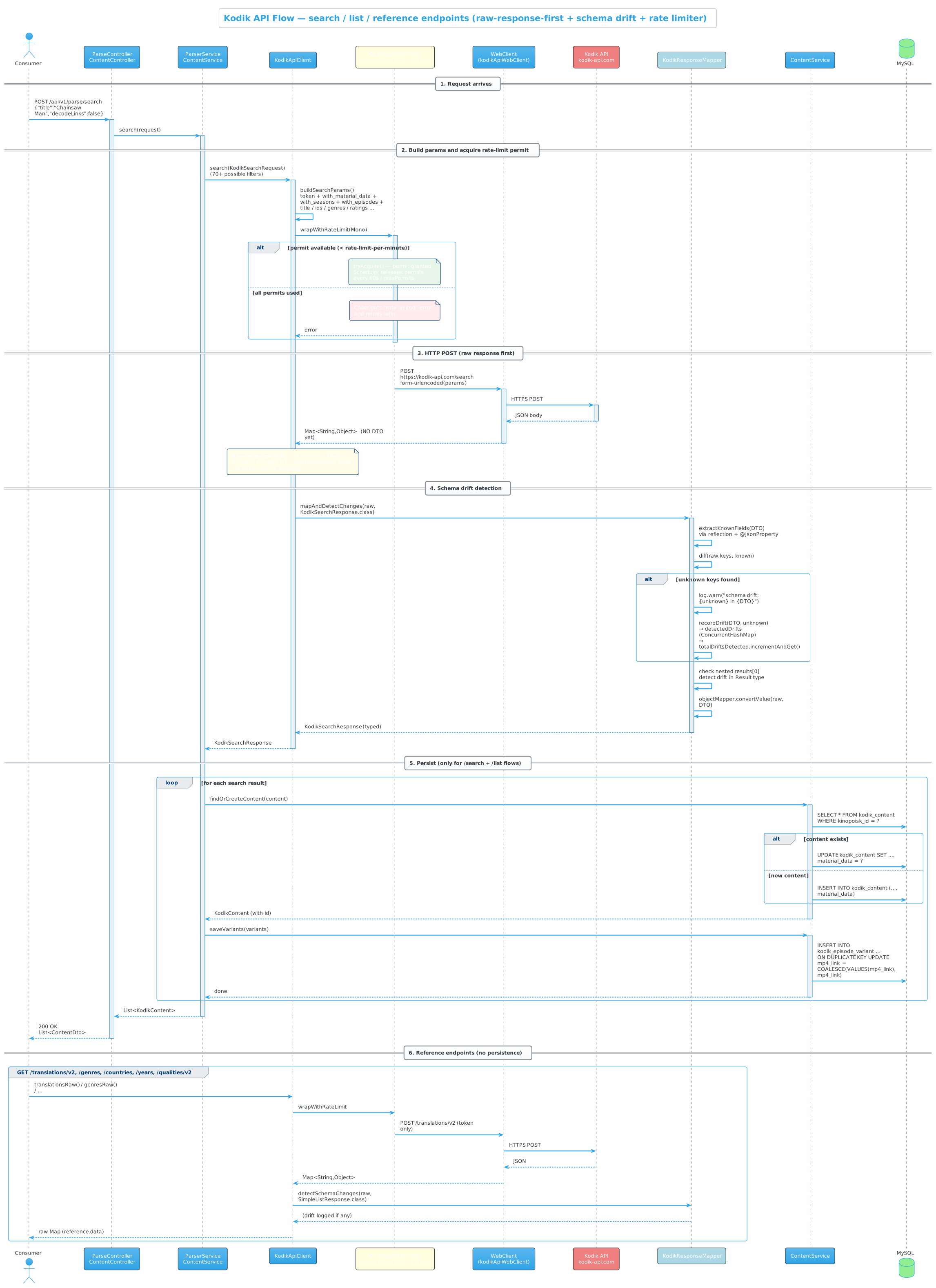
Every call to kodik-api.com goes through the same pipeline: a token-bucket
rate limiter, a raw-response-first parser, schema drift detection, and a
COALESCE-aware upsert into MySQL.
Rate limiter
Section titled “Rate limiter”KodikApiRateLimiter wraps each outbound call in a semaphore-based token
bucket:
- Bucket size =
orinuno.parse.rate-limit-per-minute. - A scheduler refills permits at a steady interval of
60_000 / max-permitsms. - If no permit is available, the caller gets back a rate-limit error and is expected to retry. The controller layer surfaces this as HTTP 429.
This is a per-process limiter — if you run multiple replicas behind a load balancer, budget the total quota across them.
Raw-response-first
Section titled “Raw-response-first”We never bind the response directly to a typed DTO on the wire. Every call
lands in a Map<String, Object>, and only then gets converted:
WebClientreturnsMap<String, Object>for the body.KodikResponseMapper.mapAndDetectChanges(raw, DTO.class)extracts the set of known fields by reflection (plus@JsonPropertyaliases).- Unknown keys are logged as
[SCHEMA DRIFT]and recorded in a counter that feeds/api/v1/health/schema-drift. - The typed DTO is produced via
ObjectMapper.convertValue(raw, DTO.class).
This preserves data even when Kodik adds new fields we do not know about yet. See Schema drift for the full story.
Domain note
Section titled “Domain note”The base URL is https://kodik-api.com — with a hyphen. Do not use
kodikapi.com; it is a different host. All Kodik endpoints are POST,
never GET.
Endpoints covered
Section titled “Endpoints covered”| Endpoint | DTO | Notes |
|---|---|---|
/search | KodikSearchResponse | 70+ filter parameters |
/list | KodikListResponse | Cursor-based pagination via next_page_url |
/translations/v2 | KodikTranslationsResponse | Voice vs subtitle metadata |
/genres | KodikGenresResponse | Reference data, cacheable |
/countries | KodikCountriesResponse | Reference data |
/years | KodikYearsResponse | Reference data |
/qualities/v2 | KodikQualitiesResponse | Reference data |