HLS Manifest Retrieval
The HLS endpoints are the bridge between Orinuno and any downstream player or downloader that speaks m3u8. They deliberately do not cache the playlist — the underlying mp4 URL has a short TTL, so every manifest is fetched fresh.
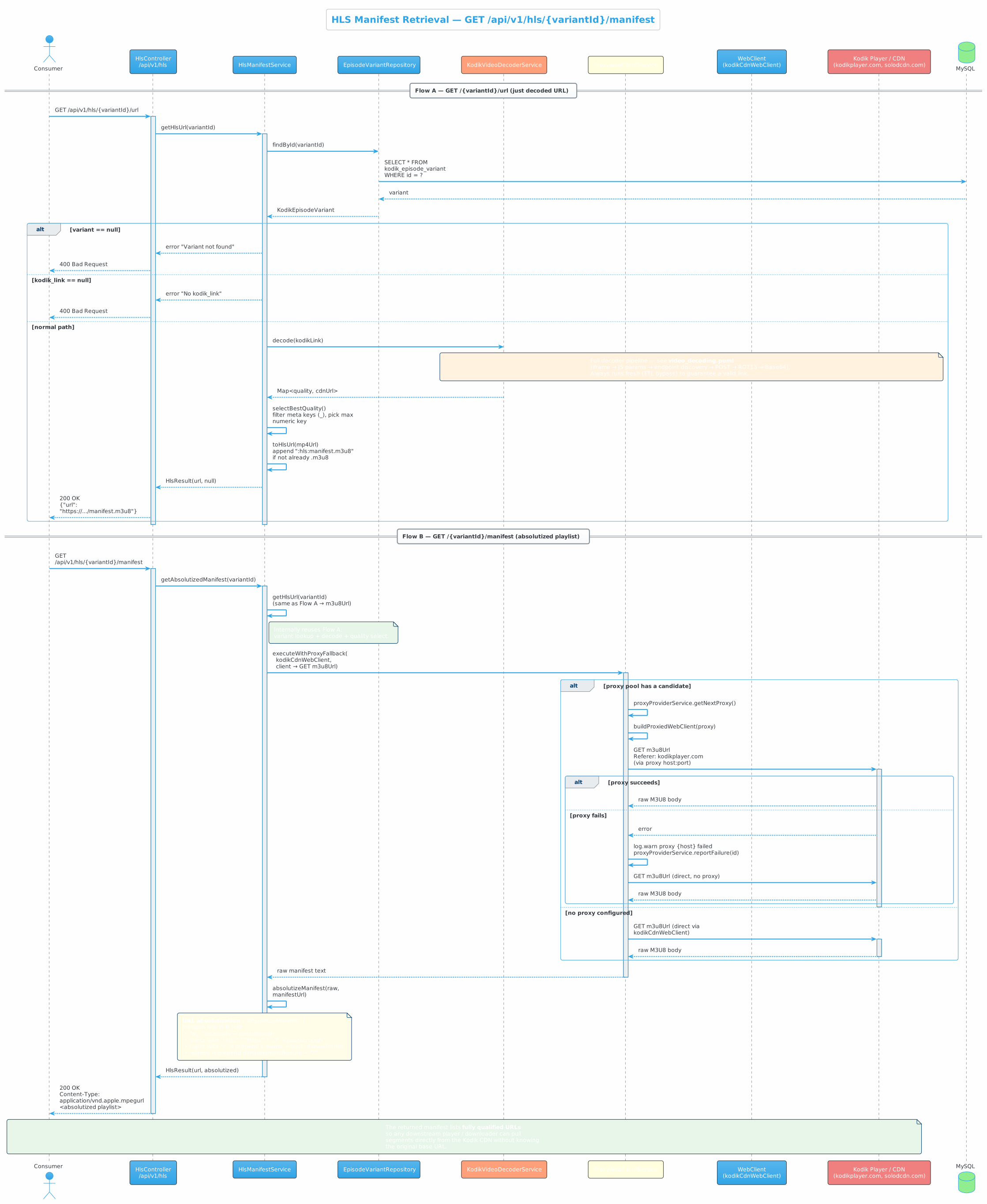
Request flow
Section titled “Request flow”GET /api/v1/hls/{variantId}/manifestlands inHlsController.HlsManifestServiceloads the variant from MySQL and callsKodikVideoDecoderService.decode(...)— no TTL cache is consulted; the caller explicitly wants a fresh URL.- The decoder returns
Map<quality, cdnUrl>. We pick the best quality and append:hls:manifest.m3u8to get the HLS entry point. ProxyWebClientServicefetches the raw m3u8 through a proxy (with a direct fallback and aReferer: kodikplayer.comheader).absolutizeManifest(raw, url)rewrites every relative URL inside the playlist so that the consumer can download segments without knowing the manifest’s base URL.
Absolutization rules
Section titled “Absolutization rules”The rewriter classifies every line:
| Input | Action |
|---|---|
#EXTM3U, #EXT-X-…, empty line | Pass through unchanged |
Absolute URL (http://, https://, //) | Pass through unchanged |
Root-relative (/path/...) | Prefix with scheme://host |
Relative (segment.ts, ../, etc.) | Prefix with dirname(manifestUrl) |
The result is a playlist where every URL is fully qualified, suitable for
ffmpeg, mpv, VLC, or any HLS client without extra -base_url flags.
Lightweight variant
Section titled “Lightweight variant”GET /api/v1/hls/{variantId}/url returns only the final .m3u8 URL without
downloading or rewriting the playlist. Use it when the downstream client can
speak directly to the CDN — for example, an external downloader that handles
relative URLs on its own.